Getting started
Finish and Format in December: A Free 31-Day Challenge
You drafted in November. December is for the ending, the revision, the cover, the ISBN and the files a house will take, one short task a day
WriterCaddy Team · November 4, 2026 · 5 min read
Priya wrote 50,000 words in November. On the first of December she has a folder called "novel", three chapters with no ending, a title she is not sure of, and no idea what a house needs before it will print the thing. Finishing feels further away than starting did.
That gap is what Finish and format in December is for. It is a free 31-day plan, from 1 to 31 December 2026, that takes a drafted book to files KDP or IngramSpark will accept. Every day has one short task, and most tasks link straight to the place on the WriterDesk where the work gets done.
Quick answer: The December challenge is free, needs no sign-in to read, and lets you tick off each day in your browser. Week one finishes and revises the draft. Week two does the front and back matter, the title and the blurb. Week three settles the house, the trim, the cover, the ISBN and the barcode. Week four runs the preflight and the proof. The last three days are the upload and the launch plan.
Why December, and why now
For more than twenty-five years, November meant NaNoWriMo for a lot of writers. The nonprofit closed in April 2025. Writers did not stop drafting in November, though. ProWritingAid started Novel November, or NovNov, as a free challenge in the same spirit: 50,000 words in 30 days. Indie Author Magazine covered its launch, and ProWritingAid runs it again this November.
We are not running a drafting challenge, and this is not a replacement for one. A November challenge gets words on the page. What usually follows is a quiet month in which the draft sits in a folder. December is a good month to close that gap, while the story is still warm and before January fills up.
What the 31 days look like
The plan is grouped by week, and each week has one goal.
| Days | Goal |
|---|---|
| 1 to 7 | Finish the draft and revise it |
| 8 to 14 | Front and back matter, title, blurb |
| 15 to 21 | House, trim, cover, ISBN and barcode |
| 22 to 28 | Preflight, proof, files |
| 29 to 31 | Upload and launch prep |
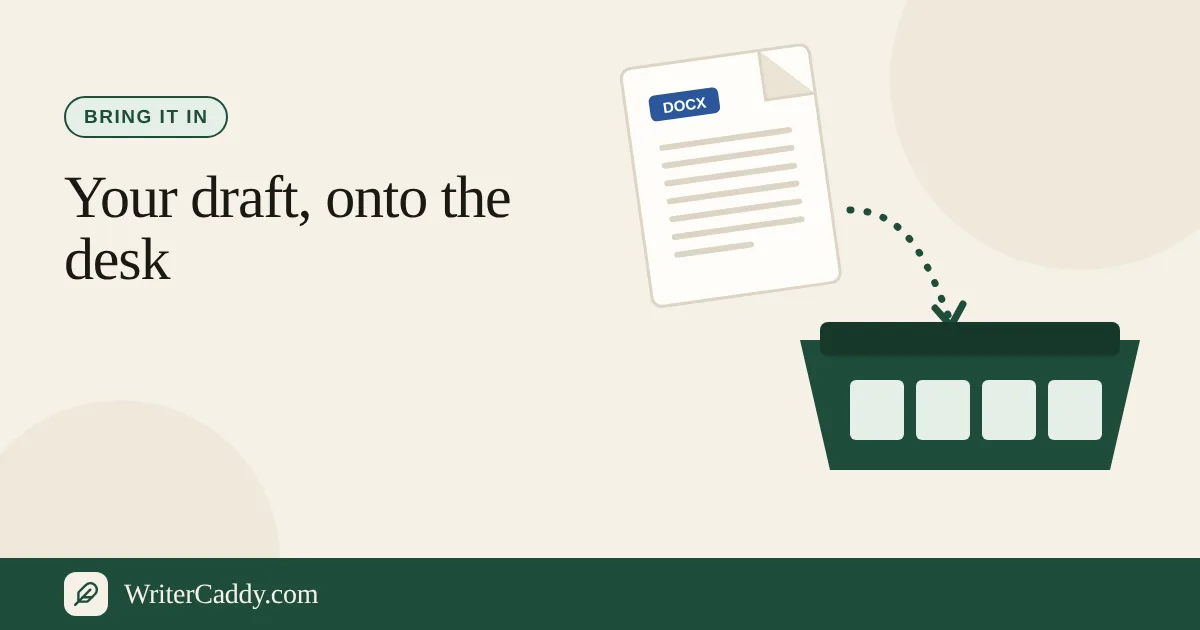
Week one starts by bringing the draft onto the desk. You can write in Word or anywhere else and bring a .docx, .txt, .md or .rtf file in. The next days list what the book still needs, write the missing pages, and write the ending. Then you read it through once, taking notes only, and fix the structure before you polish a single sentence. Day seven is a line edit, finished by hearing each chapter read aloud in the free browser voice. The listen guide explains why the ear catches what the eye skips.
Week two is the writing around the book. You settle the title and subtitle, name the reader in one sentence, and add the front and back matter the book needs. The front and back matter guide covers what goes where. The week ends with the blurb, the category and the keywords.
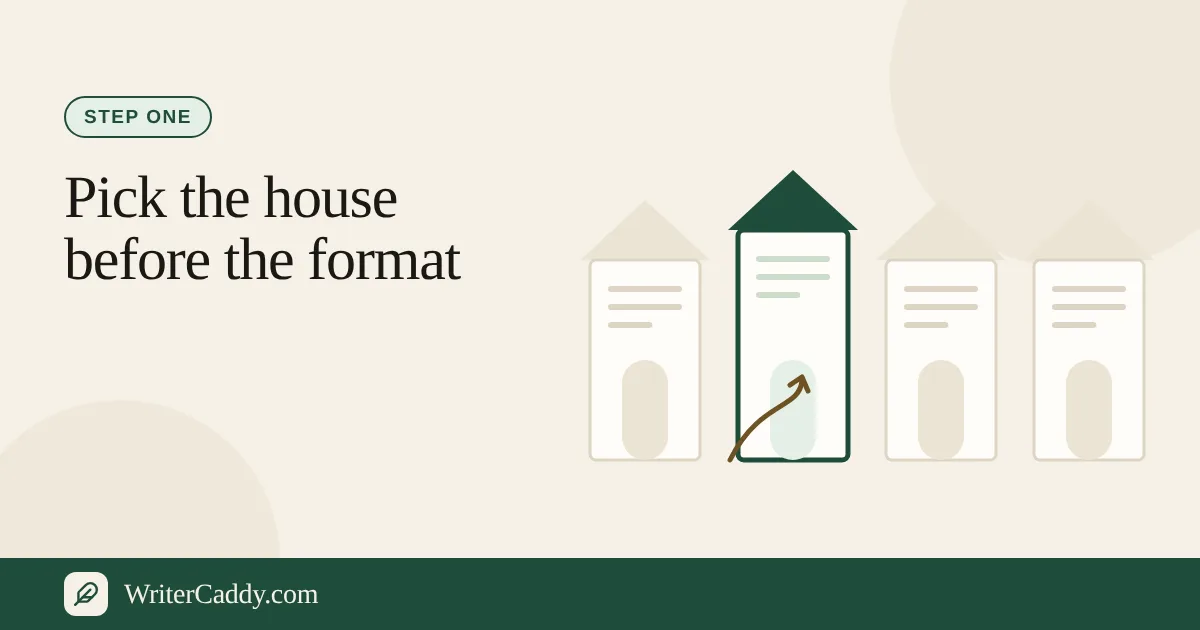
Week three is where the book becomes a product. You choose the house first, because the trim list, the ISBN rule and the margins all depend on it. Then the path (print, ebook or both), the trim size, the ISBN, the barcode, the spine and the front cover.
Week four runs the preflight on the Check step, then has you read a watermarked proof on another device, the way a reader would. Christmas Eve is a light day and Christmas Day is a rest day, because a plan you can keep beats one you abandon.
The last three days download the files, set the title up with your house, order a printed proof, and plan the launch.
Free tools you can use on the way
Three days lean on the free tools, which need no account and keep nothing you type:
- Day 17 uses the KDP trim size and margin checker to find the gutter for your page count.
- Day 19 uses the ISBN barcode generator to turn your ISBN into an EAN-13 barcode.
- Days 20 and 27 use the spine width calculator, first with an estimate and then with the real page count.
What the AI does, and does not, do here
Some days have a link marked Optional AI: suggesting the flow of the chapters, keeping the thread between them, drafting a blurb, suggesting categories, or clearing the preflight. Each one is optional. Every day can be done by hand, and nothing is written into the book unless you accept it. The AI caddy guide explains where it helps and where it stops.
What you will have on 31 December
Be clear about the finish line before you start. For a novel or a handbook, the desk gives you the manuscript as a Word file and as text, an EPUB, and a handoff record of the book's facts. KDP takes the EPUB for Kindle, and IngramSpark takes it for its ebook. For print, you put the Word manuscript into your house's interior template, and you build the cover on the house's cover template with the spine width and barcode you worked out in week three. A picture book or comic also gets a print interior PDF.
Writing on the desk and downloading watermarked copies is free with an account. Clean files, the ones a house should receive, come with the WriterCaddy plan. The trial and the plan are on the Pricing page.
How the checklist works
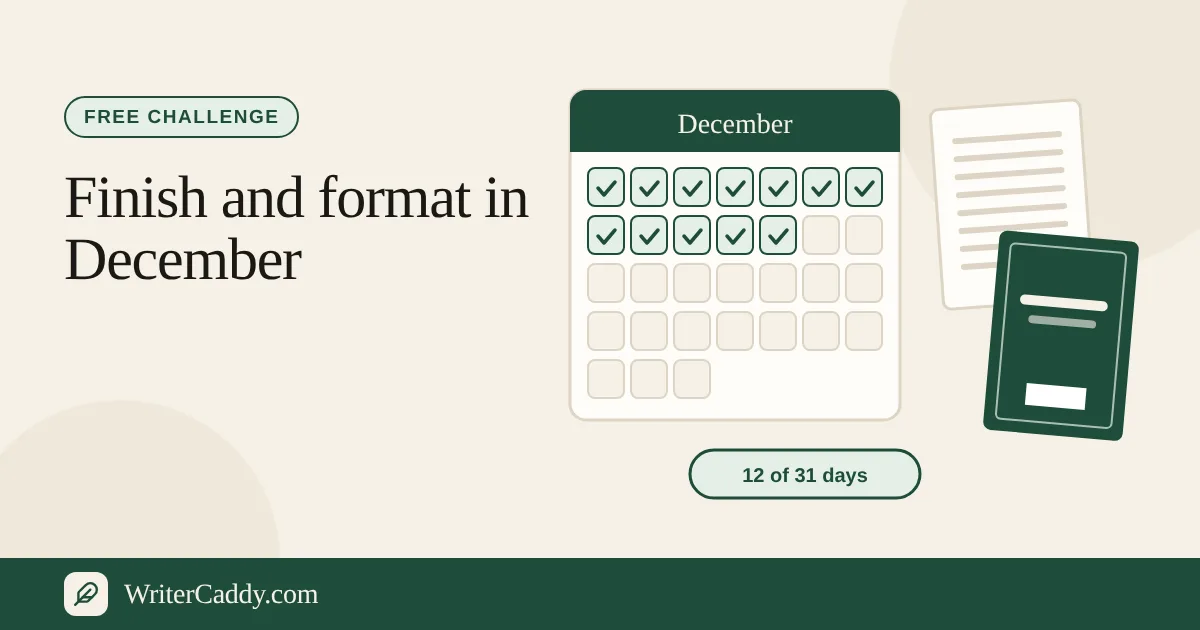
Tick a day on the challenge page and the progress line moves: "12 of 31 days", say. The ticks stay in your browser and nowhere else, so there is nothing to sign up for. If your browser blocks storage, the ticks last for the visit. There is also a printable checklist with all 31 days, for a desk or a wall. Choose "Save as PDF" in the print window if you would rather keep a file.
Can you start late?
Yes. The dates are a suggested order, not a deadline. If you find this on 12 December, tick what you have already done and pick up at the next day. If the draft needs more than a week, give it two and let the rest slide into January. A book that is finished in the middle of January is still finished.
Your next step
Open the December challenge, print the checklist, and on 1 December bring your draft onto the WriterDesk.
What is the one thing your draft still needs before it is done? Write to us at [email protected].
Try it on your own book
The sample books on the desk show every step before you start one of your own.